IVF with donor eggs even after unsuccessful IVF

We provide responsible treatment following EU standards, available to women up to the age of 49 based on individual medical assessment. Thanks to the largest database of 1,400 egg donors in the Czech Republic, we can offer solutions even in the most demanding situations.
header-image
<strong>What is</strong> donor-egg treatment?

What is donor-egg treatment?

If, for health reasons, it is not possible to use a woman's own egg for conception, it can be replaced with a healthy egg from an anonymous donor. The egg is fertilised with the partner's or donor's sperm, and the resulting embryo is transferred into the uterus of the recipient, the future mother.

Who is donor-egg treatment suitable for?

For women who do not have ovaries

For women suffering from severe ovarian endometriosis

For women diagnosed with premature ovarian failure

For women with poor-quality eggs

For women who do not produce eggs

For women whose embryos repeatedly fail to develop or implant

How it works?

We have built an extensive database of donors since we work with donations at our clinic. So we always have enough tested donors, which means that treatment can begin as soon as possible.

Why choose Unica Clinic?
  • header-image

    Specialisation in donor-egg treatment, complex cases and recurrent miscarriage
  • header-image

    The largest database of 1,400 egg donors in the Czech Republic

  • header-image

    No long waiting times for examinations
  • header-image

    Comprehensive care – all key examinations directly at the clinic

  • header-image

    The only clinic in the Czech Republic supporting single motherhood

  • header-image

    Support with holistic methods (psychology, physiotherapy and more)

  • header-image

    A coordinator who guides you through the entire process
  • header-image

    Modern and safe technologies

  • header-image

    More than 30 years of experience and qualified specialists

How do we select donors?

Our egg donors are carefully selected young women who meet strict health and genetic criteria. The goal is maximum treatment safety and the lowest possible risk of hereditary diseases in the child.

Women aged 18–35

In good physical and mental health

Free of transmissible and genetically conditioned diseases

Healthy lifestyle (BMI up to 29)

Each donor undergoes an initial screening, personal interview, and comprehensive medical examination.

  • The safety of IVF with donated eggs is based primarily on thorough donor testing.

    Before being included in the program, we perform:

    • detailed gynecological examination and ovarian ultrasound
    • genetic testing including karyotype
    • tests for sexually transmitted infections (HIV, hepatitis B and C, syphilis)
    • testing for addictive substances

    Examinations are carried out according to EU legislation and recommendations of reproductive medicine societies.

  • Every egg donor must have negative genetic findings.

    Testing excludes the most common serious hereditary diseases:

    • normal karyotype (number and structure of chromosomes)
    • negative CFTR gene – cystic fibrosis
    • negative SMN1 gene – spinal muscular atrophy
    • negative GJB2 gene – congenital deafness

    We also evaluate personal and family medical history and exclude:

    • serious hereditary diseases (e.g., hemophilia)
    • psychotic disorders
    • significant congenital defects
    • diseases with high genetic predisposition (e.g., congenital heart defects)

    Thanks to this, the genetic safety of donated eggs ranks among the highest in reproductive medicine.

  • Some couples wish to further reduce genetic risk. That is why we offer extended genetic screening before IVF.

    1. What is FERTI GeneScreen

    FERTI GeneScreen is a genetic test that detects hidden carrier status for more than 150 hereditary diseases. A person may be healthy but carry a mutation. If both partners carry a mutation in the same gene, the disease can manifest in the child. In the European population, approximately 1–2% of children are born with a monogenic disease for this reason.

    The test cannot eliminate the risk entirely, but it significantly reduces it and enables safer pregnancy planning.

    2. How genetic matching of the donor and partner works

    Extended testing is not a mandatory part of the program, but it can be added.

    Procedure:
    1. the partner undergoes FERTI GeneScreen
    2. the selected donor can undergo the same testing
    3. geneticists perform professional matching (genetic matching)

    The goal is to ensure that the partner and donor are not carriers of a mutation in the same gene and to minimize the risk of a recessive disease in the child.

    Thus, the patient undergoes only the partner's test — the clinic ensures donor selection and genetic evaluation.

First step free and with confidence

If you would like to discuss your individual situation, you can request a free and confidential consultation.

You are not obliged to continue treatment after the consultation.

🇬🇧chevron-down
+44
eucalyptus-image
childrenToy-image

Frequently asked questions

  • If, for health reasons, it is not possible to use a woman's own egg for conception, it can be replaced with a healthy egg from an anonymous donor. The egg is fertilised with the partner's or donor's sperm, and the resulting embryo is transferred into the uterus of the recipient, the future mother.

  • • for women who do not have ovaries
    • for women suffering from severe ovarian endometriosis
    • for women diagnosed with premature ovarian failure
    • for women with poor-quality eggs
    • for women who do not produce eggs
    • for women whose embryos repeatedly fail to develop or implant

  • We pay maximum attention to the selection of suitable egg donors. Candidates go through a complex selection process not only to ensure the best possible treatment success and the health of the future baby. We also carefully select them to meet the specific requirements of each couple. We emphasise the mutual similarity of the donor and recipient. We respect external physiognomic features such as eye colour, hair, body type, weight and height.

  • Donors in our database are healthy young women who have volunteered to help infertile couples become parents. Most often, these are students and young mothers on maternity leave. Each of them met the very strict criteria of the donor programme, which include:

    • most often age between 18 and 30 years

    • perfect health and mental state

    • no transmissible or genetically determined diseases

    • healthy lifestyle (BMI below 29)

  • Before a suitable donor is included in the donor programme, she must meet the legal requirements of Czech legislation. She must also undergo the following examinations and tests:

    • gynaecological examination

    • ultrasound examination

    • genetic examination

    • karyotype examination

    • test for sexually transmitted diseases (HIV, hepatitis B, hepatitis C, syphilis)

    • test for addictive substances

    • test in accordance with European tissue legislation and recommendations of professional societies (ESHRE, Society of Medical Genetics and Genomics SLG ČLS JEP)

What does treatment with donated eggs look like step by step?

  • The first step to conceiving a healthy baby using assisted reproduction is a consultation with a doctor at Unica clinic. During it, we analyse in detail the reproductive abilities of each couple. Based on the consultation and initial examination, our experts will recommend specific methods suitable for you and draw up a plan for the entire treatment. In the case of treatment with donated eggs, we will also listen to your wishes and requirements for the donor. The whole process looks approximately like this:

  • Similarity is one of the important factors when searching for a suitable donor. We therefore select a woman of the same race, with the same eye and hair colour, height and weight as the future mother. Our database contains more than 1,400 donors and is the largest in the Czech Republic.

  • The selected donor and the future mother await hormonal stimulation in this phase. The start date depends on the donor's menstrual cycle. Doctors adjust the recipient's cycle with medication to synchronise with the donor's cycle. This ensures that on the day of embryo transfer her uterine lining will be in the best possible condition to receive the embryo. This moment occurs approximately on the 10th to 14th day of stimulation, when the doctor examines the future mother and checks the height of the uterine lining.

  • On the same day we collect and fertilise the eggs, the partner submits an ejaculate sample at the clinic. If he has had sperm frozen previously, we use those cells.

    All eggs we obtain from the donor at collection are immediately fertilised using the ICSI or PICSI method. We can achieve a higher chance of successful conception with modern methods such as MACS, IMSI or MicroChip Fertile Plus®. These technologies preselect suitable sperm, which the embryologist then injects directly into the eggs.

  • Fertilisation of an egg produces an embryo. Its quality depends on the quality of sperm, eggs and the combination of genetic information of both cells.

    Extended embryo cultivation allows us to select the highest quality embryos with the greatest potential for further development. For a more detailed analysis of embryo development we use the EmbryoScope, which continuously monitors them and shows us which embryo will be most suitable for transfer into the woman's body.

    When there is an increased risk of congenital genetic diseases, we use PGT-A and PGT-M genetic diagnostic tests. These assess the chromosomal genetic makeup of the embryo and help select an embryo with a normal number of chromosomes.

  • After successful cultivation we select the best quality embryo, which is transferred into the woman's uterus. During transfer we use one, or a maximum of two embryos. Other quality embryos can be frozen and stored for later conception (KET method) at the couple's request.

  • On the sixth to seventh day of its development, i.e. two days after transfer, the embryo implants in the uterus. How successful the implantation will be depends on various factors. One of them is, for example, the height of the endometrium. The chance of embryo implantation can be increased with the EmbryoGlue® method.

header-image

We’re here for you

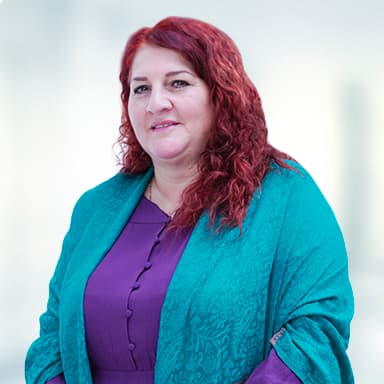
Any further questions? Our coordinator will answer all your questions and arrange everything for your upcoming visit to our clinic.

Ljiljana-photo

Ljiljana

clinic Prague

+420 736 148 812

English speaking

Helena-photo

Helena

clinic Brno

+420 735 759 071

English speaking

eucalyptus-image
childrenToy-image
Easter background

We are here for you
during Easter!

The Unica Clinic team is available during Easter to ensure that your treatment can continue without unnecessary interruptions.